Nanomagnetism
Magnetic Skyrmions & Chiral Magnetism
Magnetic skyrmions are chiral magnetic textures in which the magnetic moments wrap into a continuous loop, with the magnetization at the core and perimeter oriented in opposite out-of-plane directions. This unusual magnetic structure gives the skyrmion topological protection, meaning it cannot be continuously deformed into a different topological class without a discontinuous event.
The small size, often below 100 nm, and defect tolerance of skyrmions make them attractive for future spin-based logic and data technologies. At the same time, their particle-like behavior makes them an unusually rich platform for fundamental studies of magnetic topology, dynamics, and collective order.
The group has worked closely with national-lab and university collaborators to study hybrid skyrmion structures that are stable at room temperature and over a range of magnetic fields, including zero field. We use neutron scattering, X-ray scattering, micromagnetic modeling, and magnetic spectroscopy to investigate skyrmion structure, dynamics, and formation mechanisms.
Collaborations: Representative collaborators include Eric Fullerton, Lisa DeBeer-Schmitt, Sergio Montoya, Julie Borchers, and Alexander Grutter.

Methods
Neutron & X-ray Scattering
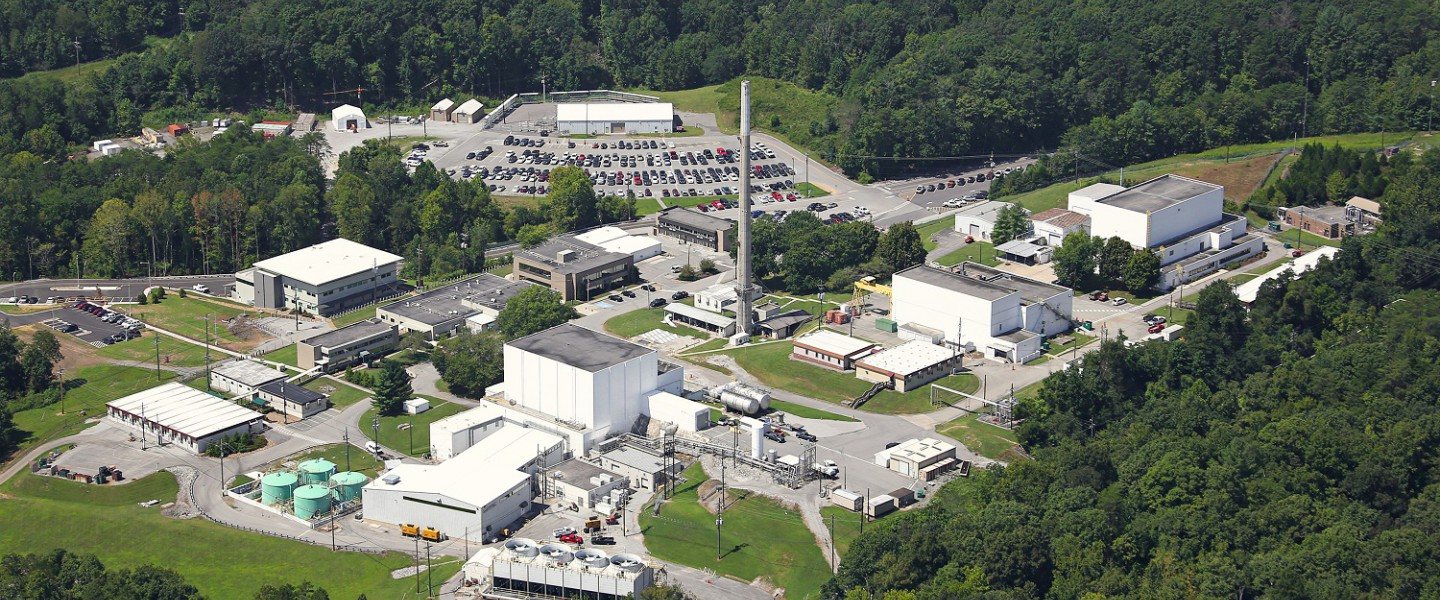
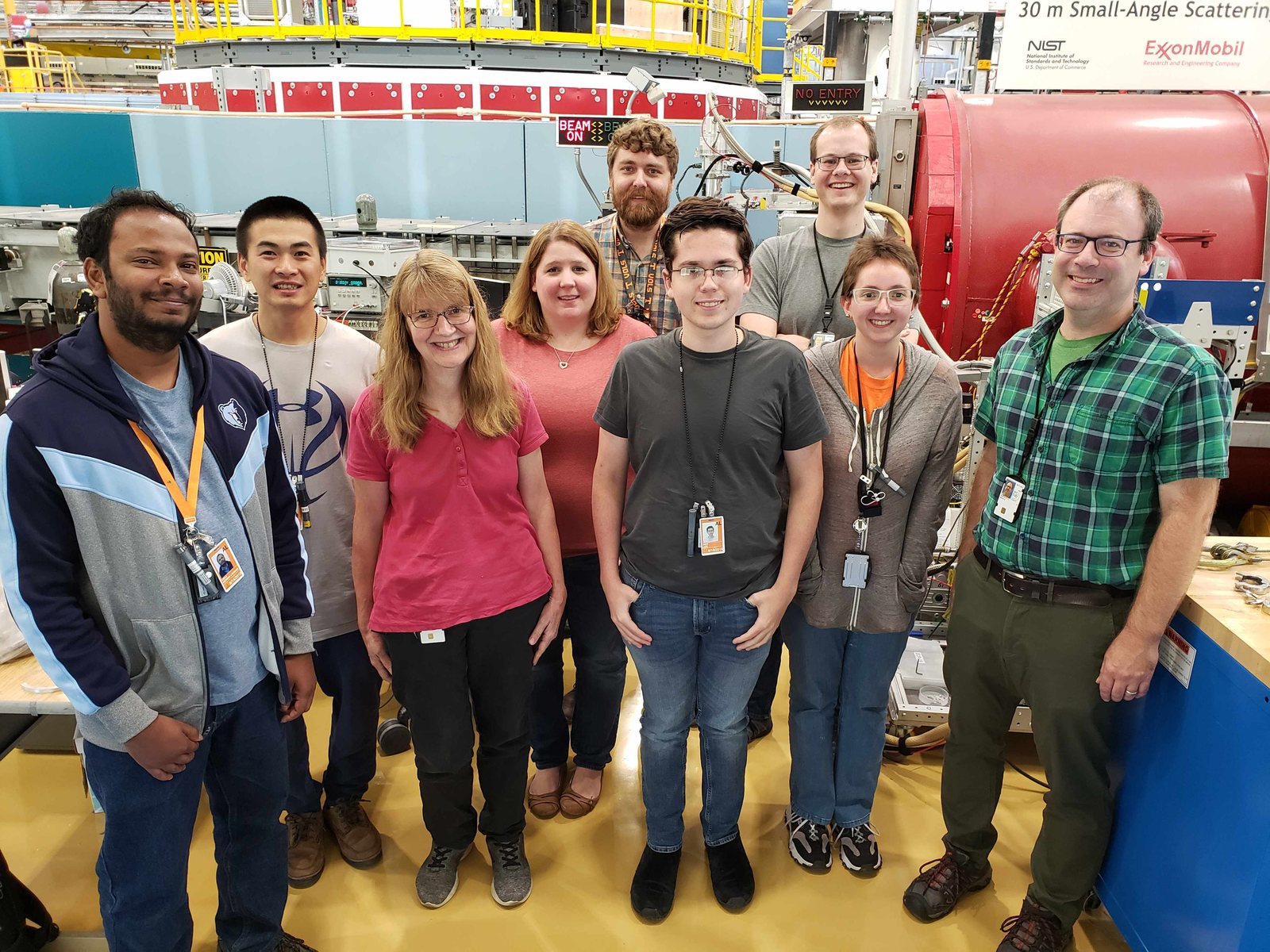
Neutron and X-ray scattering are central to the lab because they provide information that is difficult or impossible to obtain with conventional probes. Neutrons are sensitive to both structure and magnetism, penetrate deeply into materials, and can resolve buried interfaces and nanoscale magnetic textures.
Our group uses polarized neutron reflectometry, small-angle neutron scattering, grazing-incidence methods, resonant X-ray scattering, and related approaches to connect real-space structure with magnetic and electronic function.
A recurring theme is method development: adapting beamline techniques, sample environments, and modeling workflows so that scattering can answer questions about thin films, heterostructures, and nanoscale magnetic systems.
Collaborations: Work frequently uses ORNL and NIST neutron and X-ray facilities, including SNS, HFIR, and NCNR.
Quantum interfaces
Topological & Quantum Materials
Topological and quantum materials exhibit properties that are governed by electronic structure, symmetry, and interfaces. In these systems, surfaces and buried boundaries can host electronic states with coupled spin, charge, and momentum behavior.
The lab is interested in how these states survive, reorganize, or fail when placed in realistic heterostructures with metals, magnets, superconductors, and other functional materials.
This research direction emphasizes experimentally accessible signatures of interfacial quantum behavior while preserving a materials-first perspective: growth, structure, disorder, and buried interfaces matter.
Collaborations: This work connects materials growth, transport, magnetism, and interfacial probes.
Non-volatile materials control
Voltage Control & Magneto-Ionics
Controlling material properties with voltage offers a route toward on-demand functional materials: magnets, electronic states, optical response, thermal response, and superconducting behavior could in principle be switched or tuned electrically.
Rather than relying only on small volatile electronic effects, the lab has explored ionic migration as a route to larger and non-volatile control. In these systems, voltage can redistribute light ions such as oxygen, changing local chemistry and therefore magnetic, structural, and electronic properties.
Using element-specific X-ray spectroscopy and depth-resolved neutron reflectometry, we map where ions move and how that motion changes material behavior. This work provides a materials-science view of magneto-ionics and voltage-controlled heterostructures.
Collaborations: Representative collaborators include Alexander Grutter, Julie Borchers, Kai Liu, and multiple X-ray/neutron user-facility teams.
Materials discovery
High-Entropy & Compositionally Complex Materials
High-entropy alloys and oxides contain multiple principal elements distributed across a lattice. This creates broad distributions in atomic mass, radius, electronegativity, spin, and bonding, which can strongly perturb electronic, magnetic, structural, and thermal behavior.
The lab studies these materials as functional systems, not only as structural alloys. We are interested in how disorder, local chemical environments, competing phases, and nanoscale heterogeneity generate useful magnetic, thermal, electronic, and chemical responses.
A major opportunity is the use of combinatorial synthesis and rapid characterization to navigate large compositional spaces. This makes complex materials a natural arena for data-driven and high-throughput discovery.
Collaborations: This work is highly collaborative across UTK, ORNL, national laboratories, and materials theory/processing groups.
Architected materials
Nanowire Metamaterials
Metallic nanowires can be woven or assembled into low-density structures similar to nanoscale bird nests. These scaffolds combine very low density with enormous surface-area-to-volume ratio and the intrinsic functionality of metals.
The resulting materials are attractive for aerospace, catalysis, batteries, thermal management, electromagnetic response, and defense-relevant materials challenges. Our interest is in understanding how nanowire composition, connectivity, density, and architecture determine macroscopic function.
Current and recent work includes high-entropy nanowire scaffolds, metallic nanowire foams, microwave response, and low-density structures designed for extreme environments.
Collaborations: Representative collaborators include Kai Liu and Anna Douglas, along with defense and energy partners.
Magnetism in living systems
Biomagnetism & Magnetoreception
This work started with a deceptively simple question: honeybees are magnetic, but what about the rest of the bees? That question opened a research direction connecting nanomagnetism, organismal biology, ecology, phylogeny, and magnetoreception.
The lab measures magnetic signatures in insects to determine whether magnetic materials are present, where they occur, how they vary between species, and whether they correlate with traits such as body size, sex, nesting behavior, sociality, and evolutionary history.
Recent work has shown that ferromagnetic signatures are widespread across bees and also appear in non-bee outgroups, motivating broader studies of magnetism and magnetoreception across Apocrita.
Collaborations: Representative collaborators include Laura Russo, Anne Murray, Laurence Packer, Michael Winklhofer, and Seán Brady.
Collaborative research
I pursued a faculty position to explore the magic of the universe surrounding us. While the lab has research directions that it owns and leads, we are always excited by meaningful collaborations where magnetism, scattering, or materials insight can help answer a hard question. This collaborative attitude has led to work in nuclear engineering, electronics design, fundamental materials science, extreme environments, plasmonics, biomedical applications, quantum materials, artificial structures, and interface effects.